Live public guide
FND Guide
Making difficult health information easier to navigate without losing its safeguards.
Product strategy · Information architecture · Accessible interaction design · Content governance · Verification
The challenge
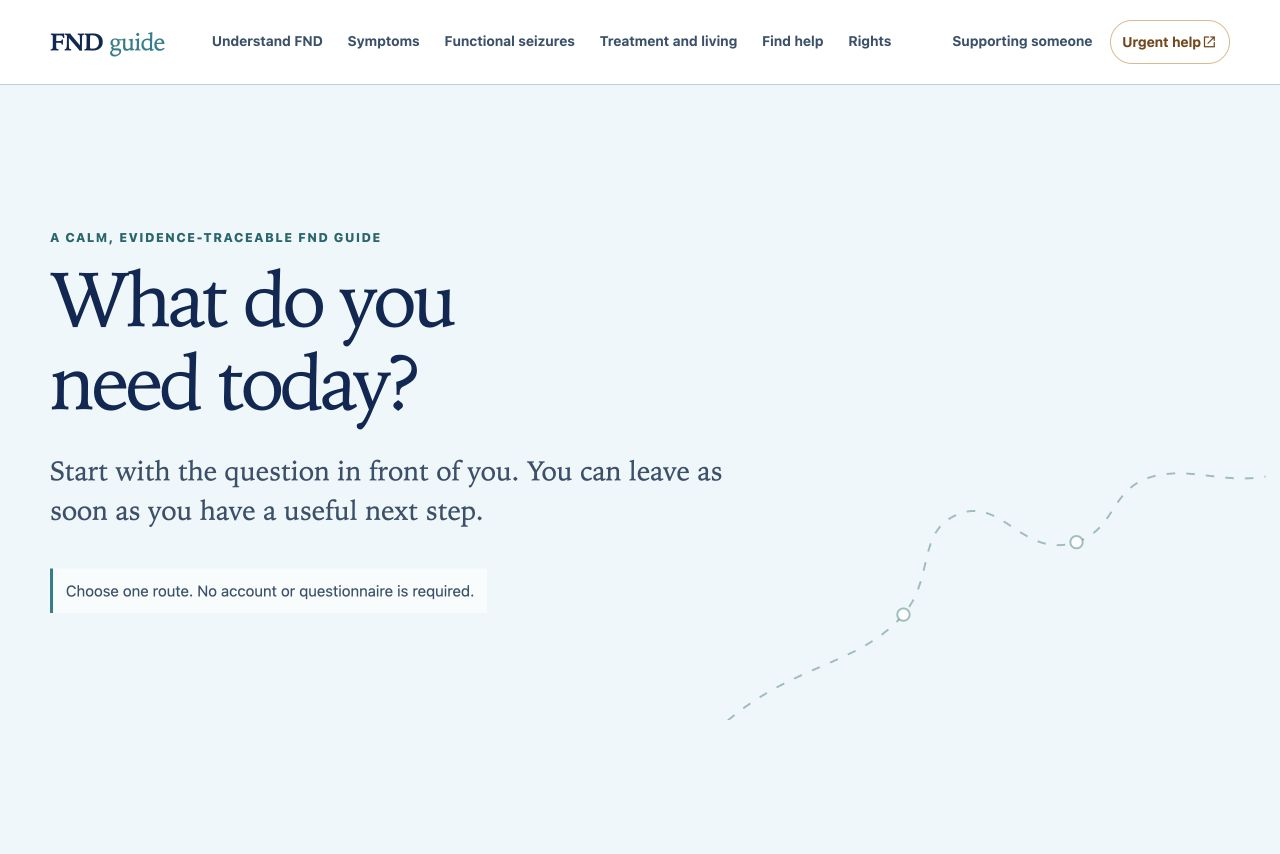
People looking for information about Functional Neurological Disorder can be tired, overwhelmed or unsure where to begin. The guide needed to make a useful next step clear while keeping urgent help, evidence and medical boundaries visible.
Built around the real constraint.
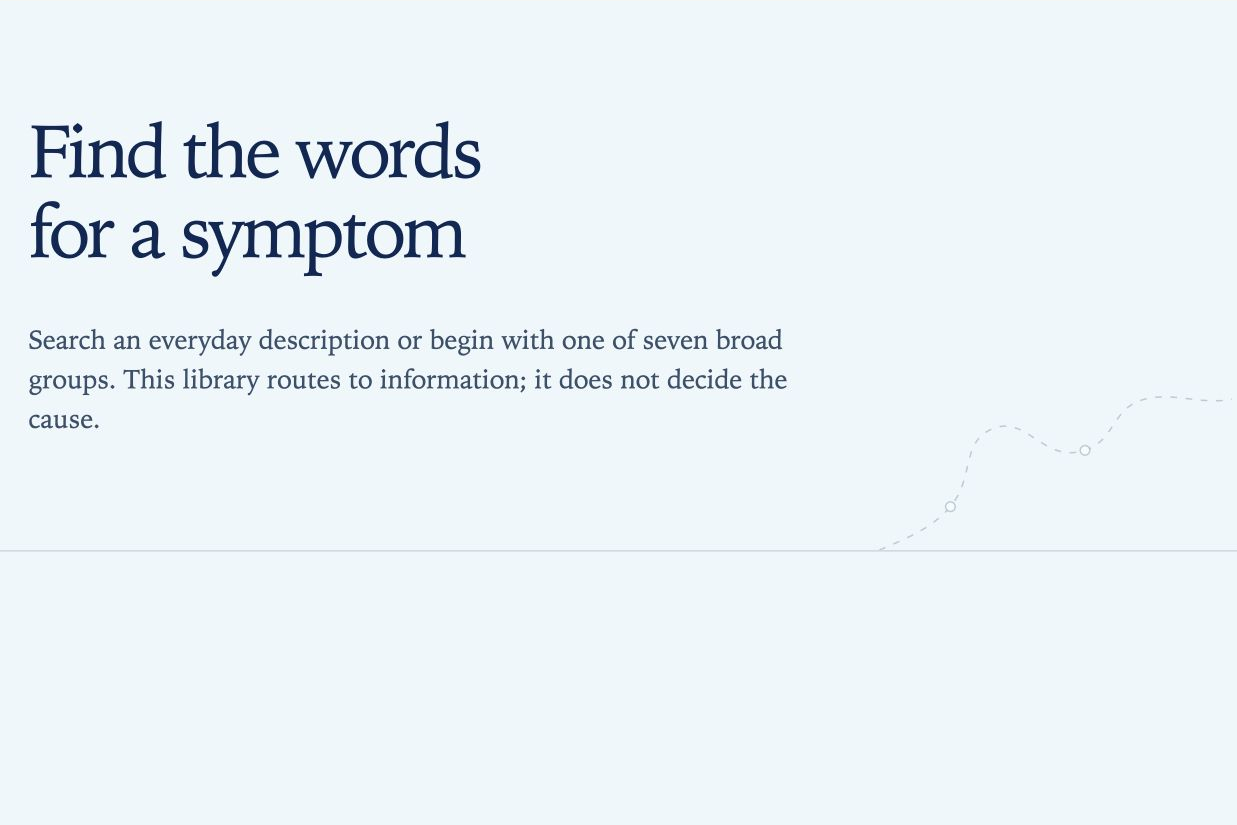
I structured the experience around the question a visitor has today — understanding FND, finding words for a symptom, treatment and living, finding help, supporting someone and rights. Page-level evidence and transparent boundaries sit alongside calm, mobile-first interaction rather than feeling like a separate governance layer.
Role
One connected product responsibility.
I held the thread from product direction and interaction design through delivery and evidence.
- Product strategy
- Information architecture
- Accessible interaction design
- Content governance
- Verification
What was built
- A public 37-route guide organised around the question a visitor has today
- Symptom routing that helps people find information without identifying a cause
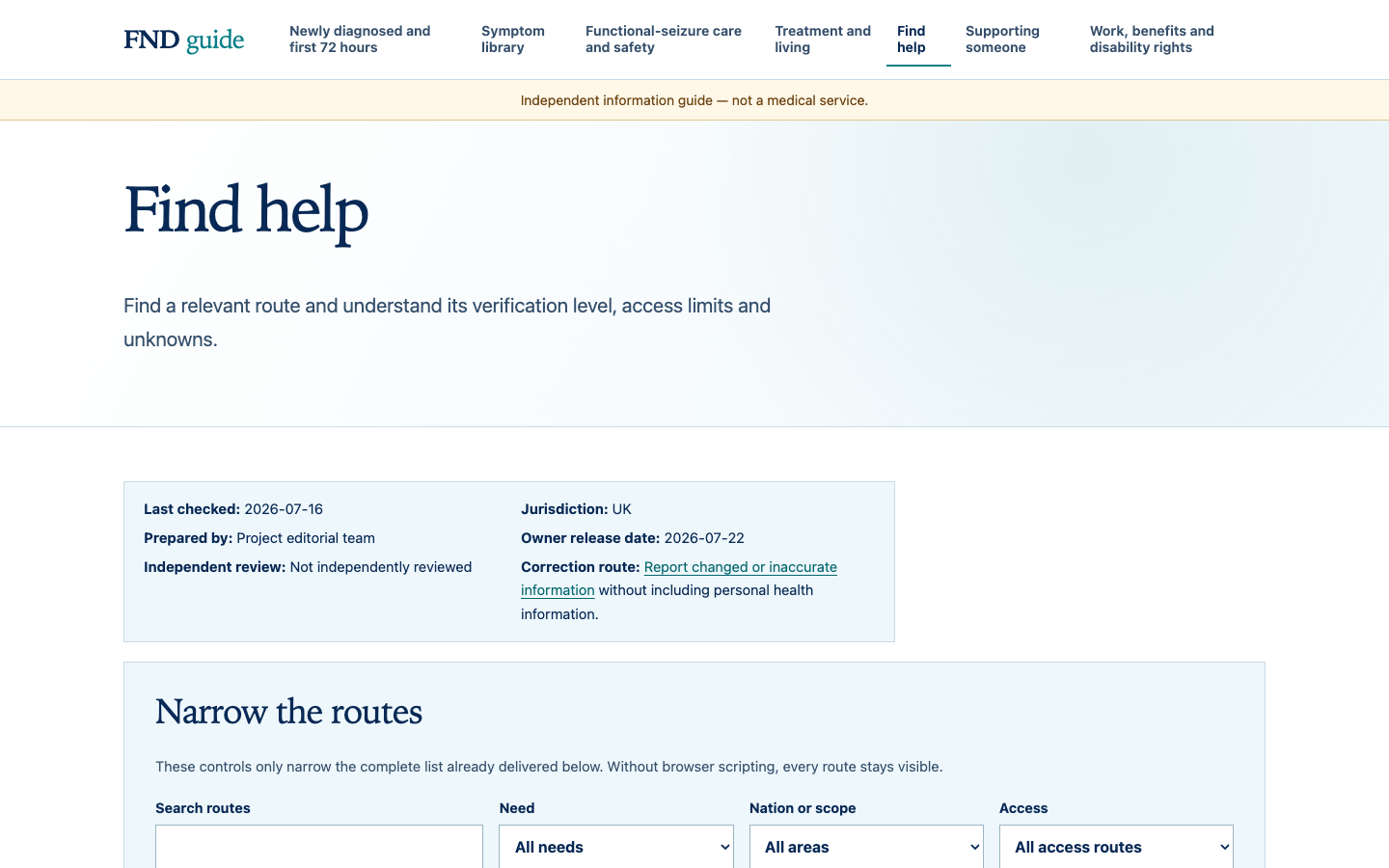
- A searchable help directory with 17 visible service and support records at launch
- Low-energy mobile navigation, reduced-motion support and no-account access
- Page-level evidence, authorship and review context that makes information traceable
- Carefully bounded routes for urgent help, functional seizures, treatment, support and rights
Verification
- Production checks across all 37 canonical routes at desktop and mobile sizes
- Keyboard, reduced-motion, reflow and small-screen review without claiming formal conformance
- Safety-boundary checks for diagnosis, treatment and urgent-help language
- Search Console ownership and a successful sitemap submission with 37 discovered pages
- No project analytics, advertising cookies or account requirement
Product screens
Built for real decisions.
Lessons carried forward
What the work taught me.
- Task-first navigation can make difficult information feel more manageable.
- Safety becomes more useful when it is part of the interaction, not a buried disclaimer.
- Evidence and lived experience need different roles, both visible to the reader.